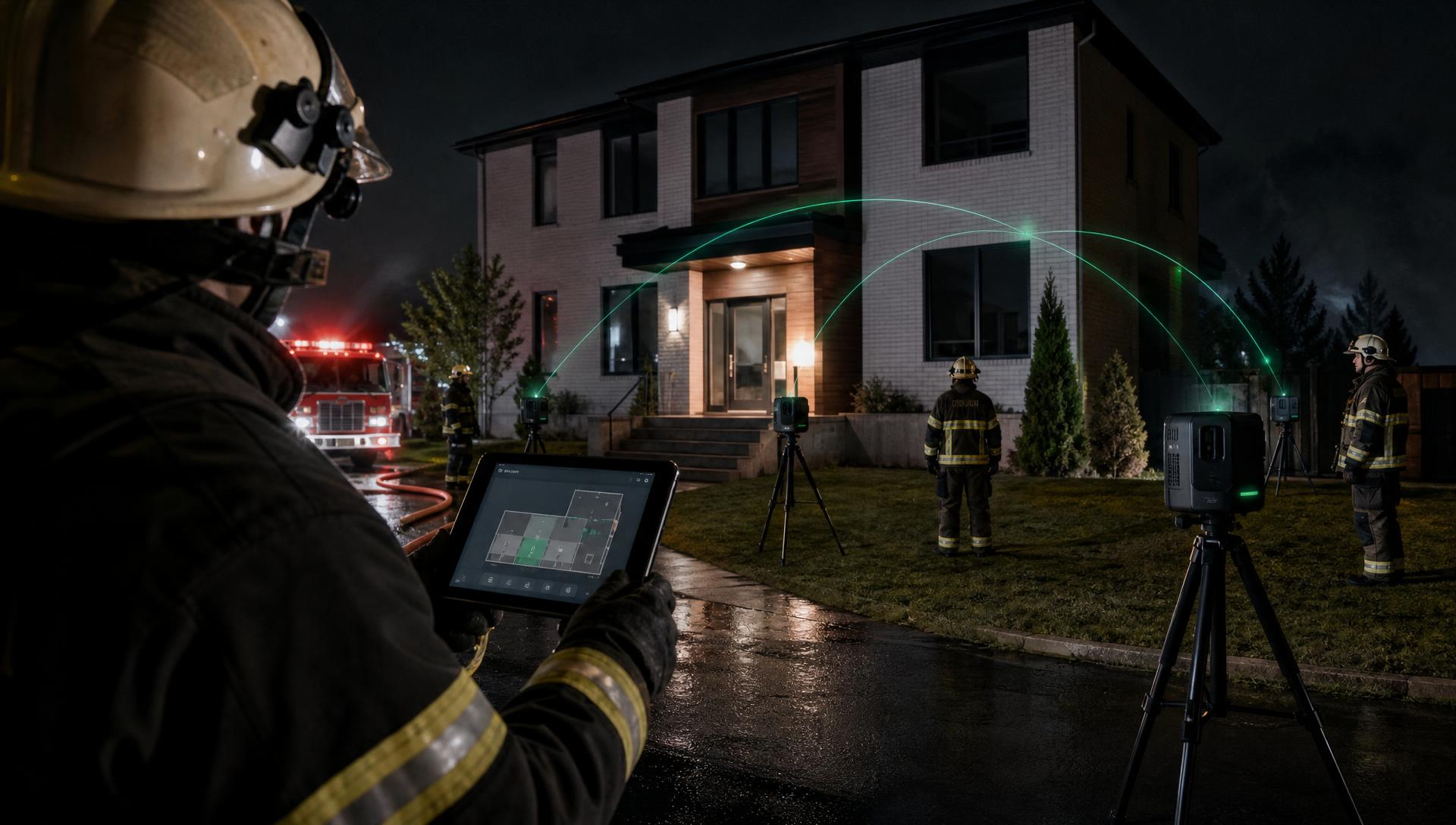
Ambianceintel Rescue — a division of Ambianceintel
See More When Every Second Matters.
Portable spatial intelligence for rescue teams operating when visibility, access and certainty are limited.
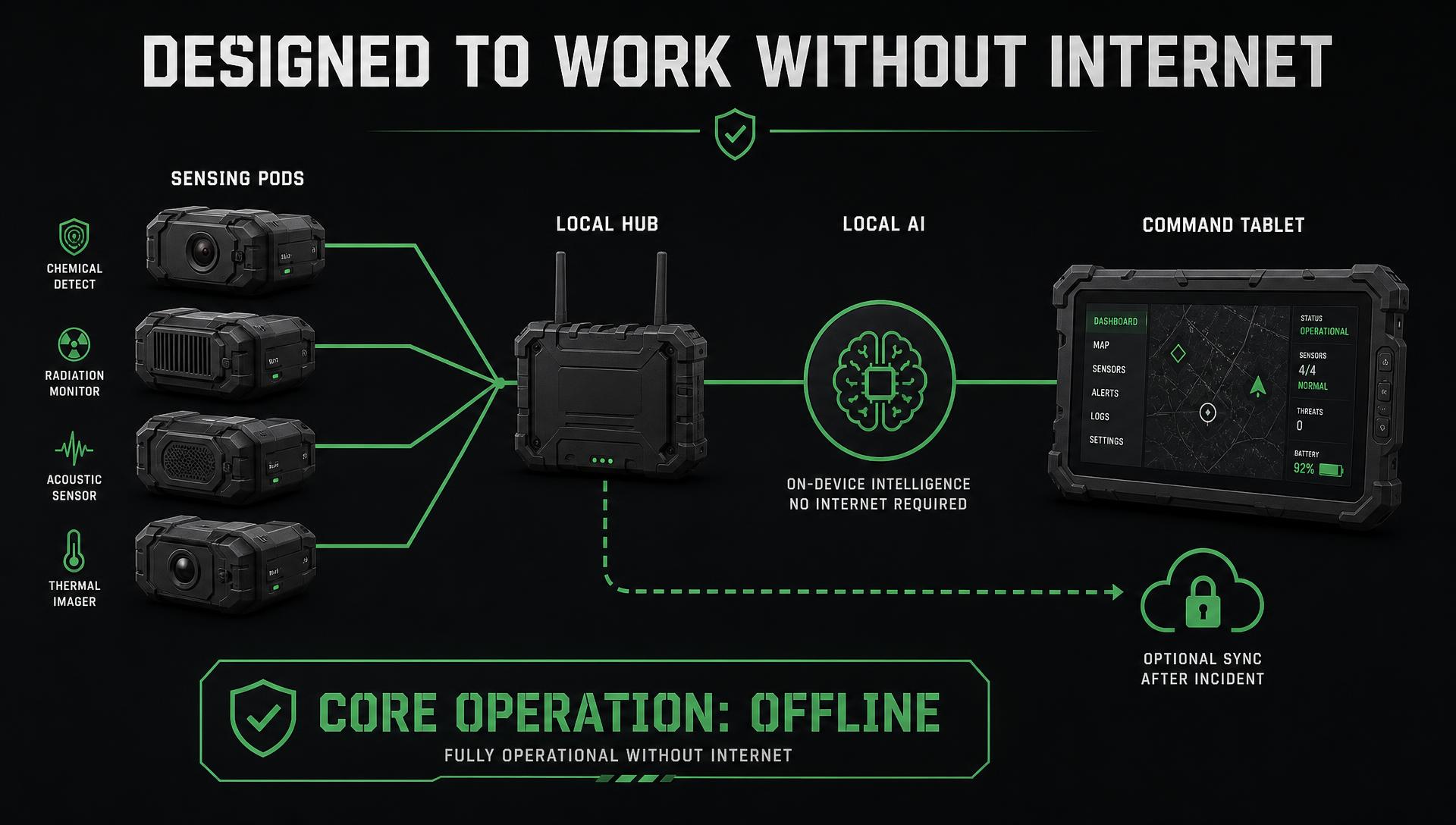
Ambianceintel Rescue combines distributed sensing, edge AI and responder identification to provide another source of situational information without relying on cameras or cloud connectivity.
Ambianceintel Rescue is being developed as supplemental decision-support technology and is not intended to replace established search-and-rescue procedures.
The problem
Rescue teams operate with incomplete information
In the first minutes of an incident, teams work from partial reports and limited visibility. Ambianceintel Rescue is designed to add one more source of evidence to that picture.
Who may still be inside?
Reports conflict, occupancy records are out of date, and the building does not answer the question on its own.
Where should additional search attention be directed?
Crews are finite. Any credible indication of where to look first changes how they are assigned.
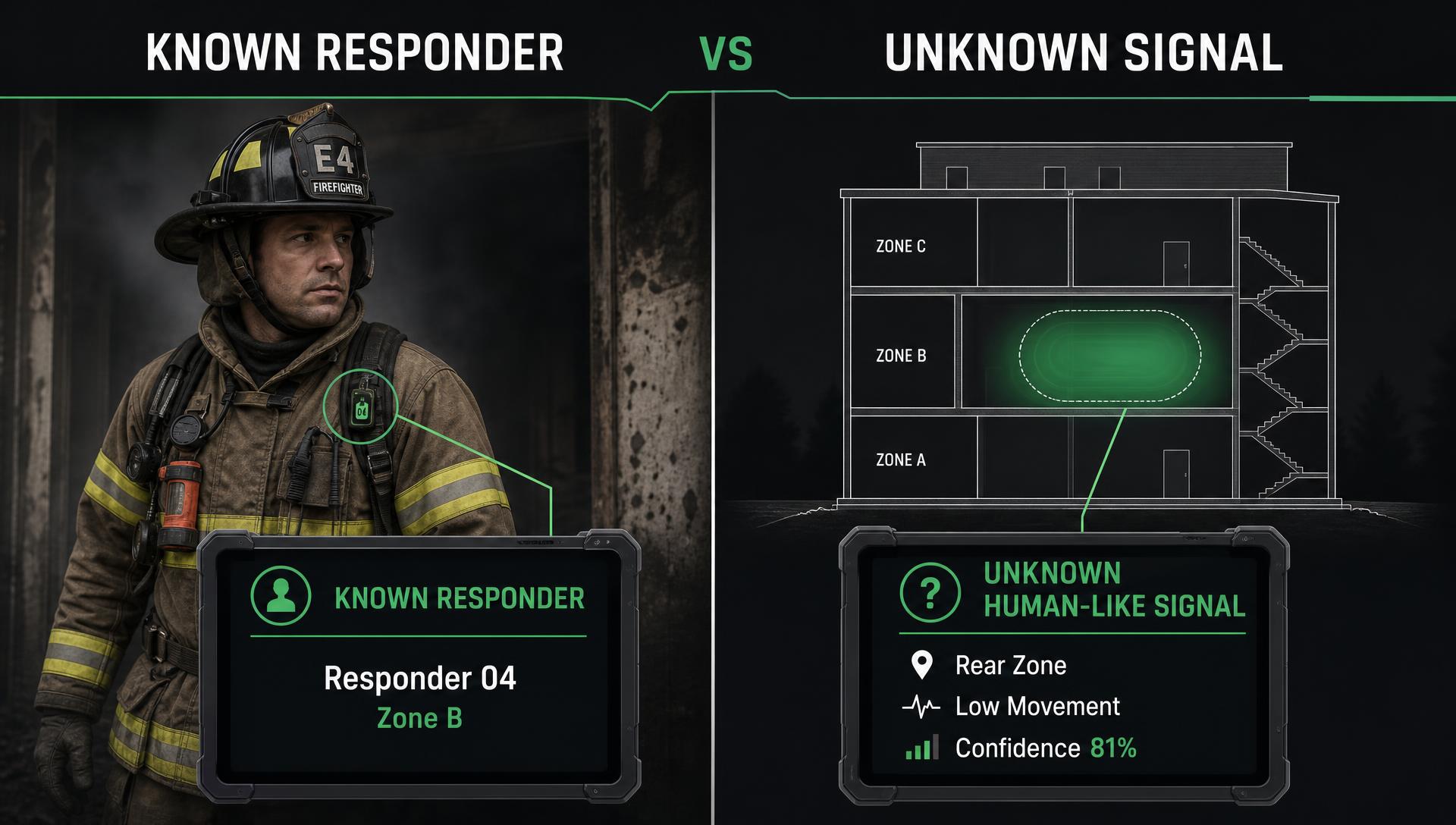
Is detected activity a responder or an unknown person?
Without a way to separate known team members from unknown movement, every signal has to be treated as ambiguous.
Do we have enough sensor coverage to trust the result?
Coverage and signal quality have to be visible, so a quiet zone is never mistaken for a cleared one.
How it works
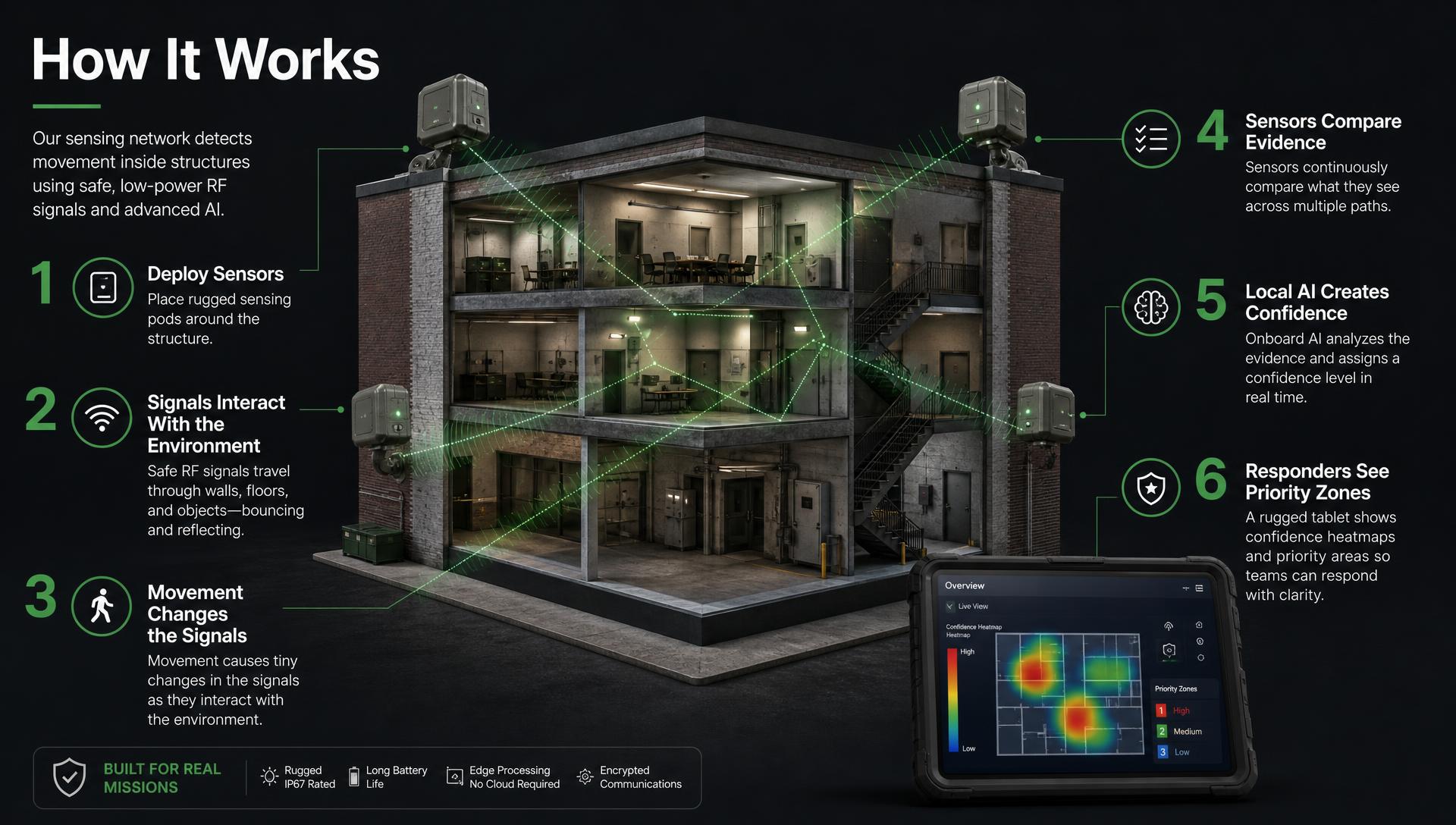
Deploy. Sense. Analyze. Inform.
- 01
Deploy
Place portable Rescue Pods around the structure or search area.
- 02
Sense
Multiple radio technologies observe changes in the environment.
- 03
Analyze
The local Rescue Hub combines sensor evidence using edge AI.
- 04
Inform
Responders receive zone-level activity information, responder positions and confidence.
What the system may indicate
- Possible human-like signal
- Movement detected
- Low movement
- Approximate activity zone
- Known responder
- Confidence
- Signal quality
- No confirmed human-like signal
What it does not claim
- Guaranteed detection of all people
- Exact headcount in every environment
- Medical condition or injury severity
- Exact victim coordinates
- Proof that an area is empty
The product
A portable system built for field conditions
Hardware and software designed to be carried, deployed and understood under pressure.
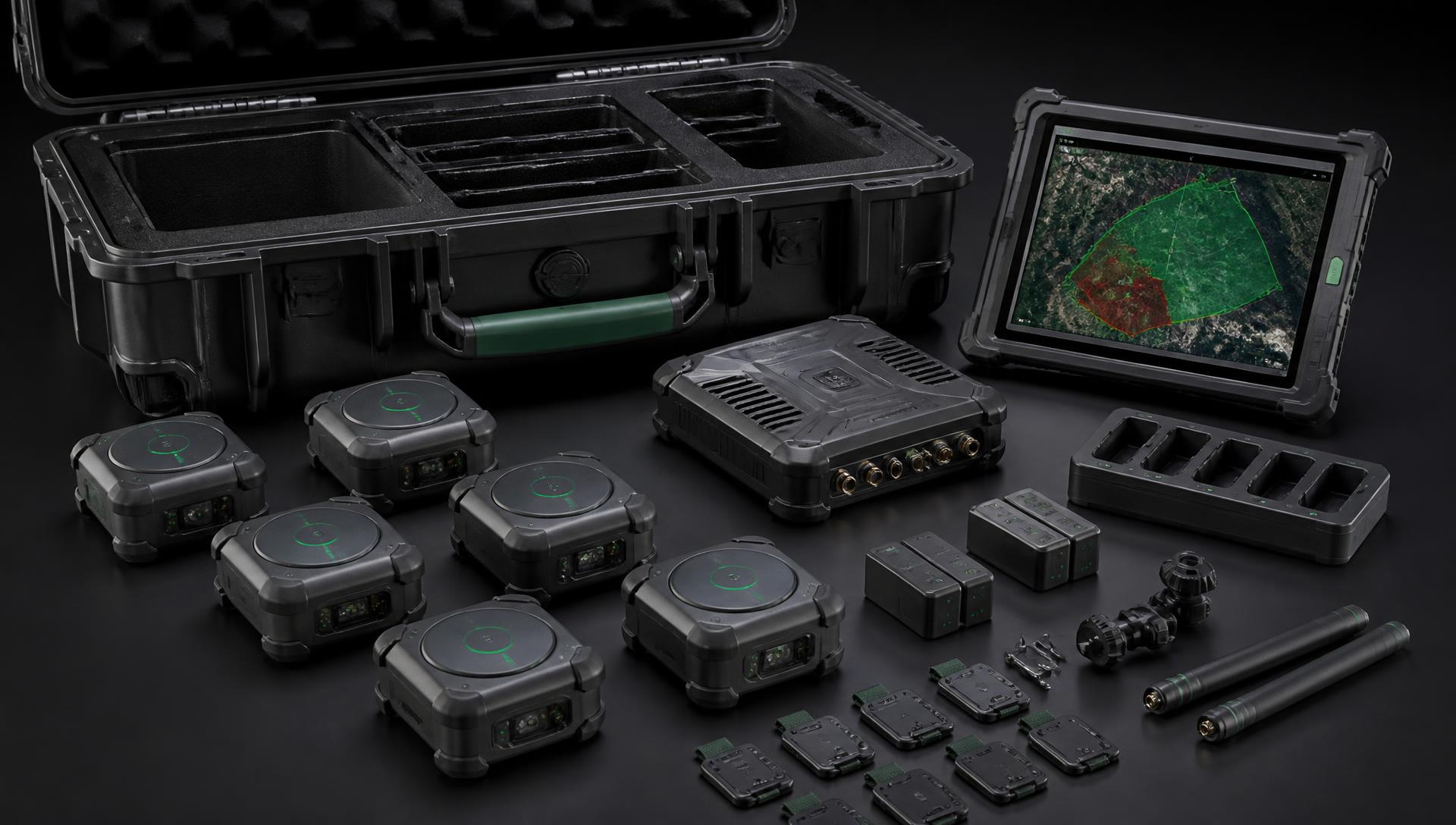
Rescue Pod
Portable distributed sensing.
Compact battery-powered sensing nodes positioned around an incident environment to provide multiple RF perspectives.
Rescue Hub
Local intelligence.
Processes sensor information locally and combines multiple sensing technologies without relying on cloud connectivity.
Responder Tag
Know your team.
Small responder-worn tag designed to distinguish known personnel from unknown human-like activity.
Command
Simple operational intelligence.
Rugged tablet interface showing sensing zones, responder positions, confidence and system health.
RescueCase
Ready to deploy.
Transport, charging and deployment system containing the complete Ambianceintel Rescue platform.
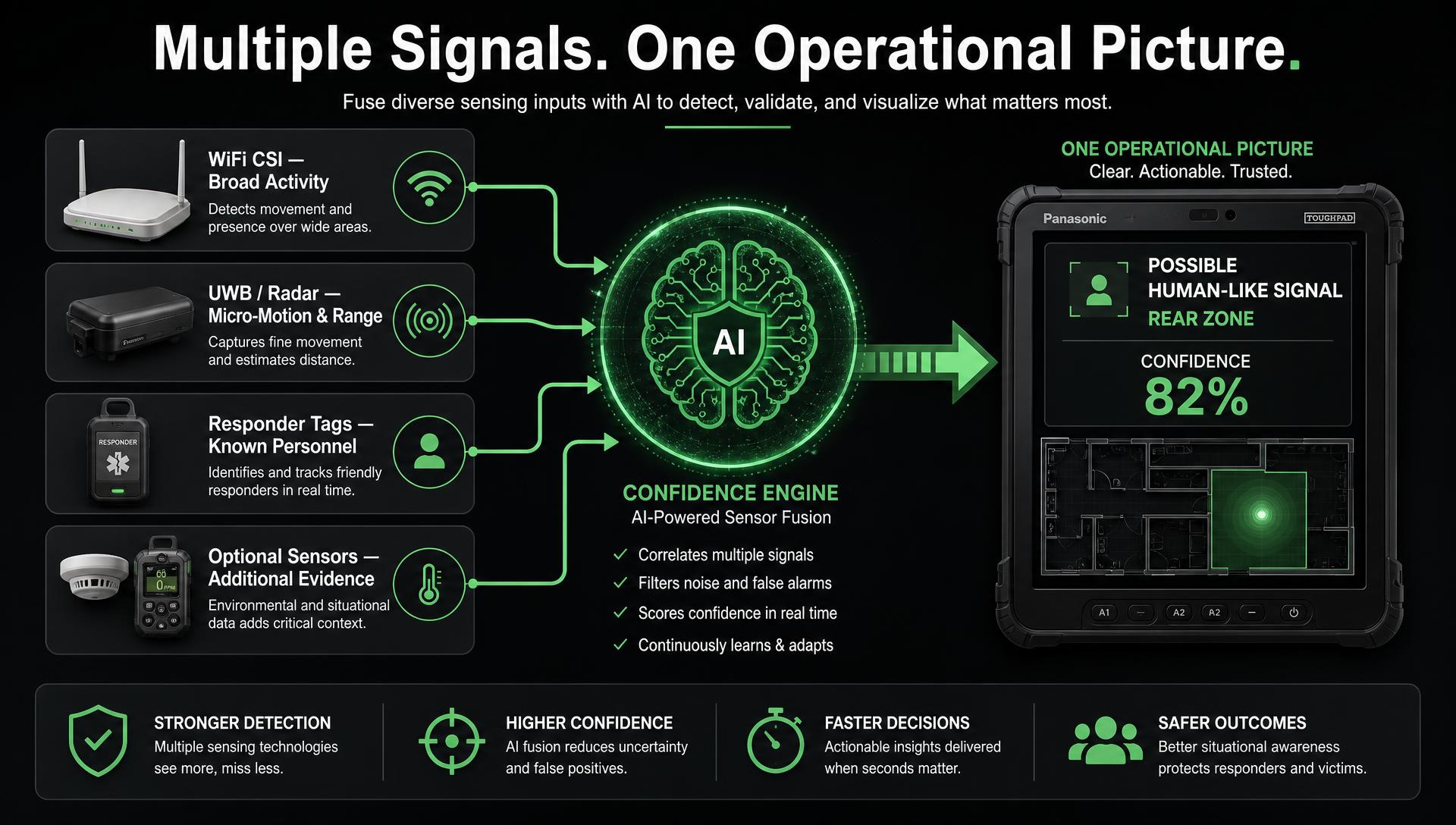
Sensor fusion
Multiple sensing technologies, one interpretation
Every sensing technology has limitations. Combining them and reporting confidence is more honest than trusting one signal.
Wi-Fi CSI
Broad environmental activity.
UWB / radar
Additional ranging and micro-motion information.
Responder tags
Identify known personnel.
Optional sensors
Additional environmental evidence where appropriate.
Designed for the first three minutes
Deployment speed is a design requirement
- 00:00Arrive
- 00:30Open RescueCase
- 01:00Deploy Pods
- 01:30System calibration
- 02:00Sensing begins
- 03:00Initial situational information
Timings describe the intended deployment workflow and will vary with conditions, team familiarity and incident constraints.
Where it is used
Four operating environments
Fire & Rescue
Structure fires and interior search support where smoke and heat limit visibility.
ExploreUrban Search & Rescue
Collapsed and partially collapsed structures where access is limited and slow.
ExploreIndustrial Response
Plants, refineries and confined spaces with strict accountability requirements.
ExploreDisaster Response
Wide-area events with degraded communications and no reliable infrastructure.
Explore